The service brings cold water from the main into the house. A branch feeds the water heater, which supplies the hot side of the faucet. Both supply lines usually stay pressurized with the faucet closed. A supply leak can continue between uses.
Gravity drain & vent
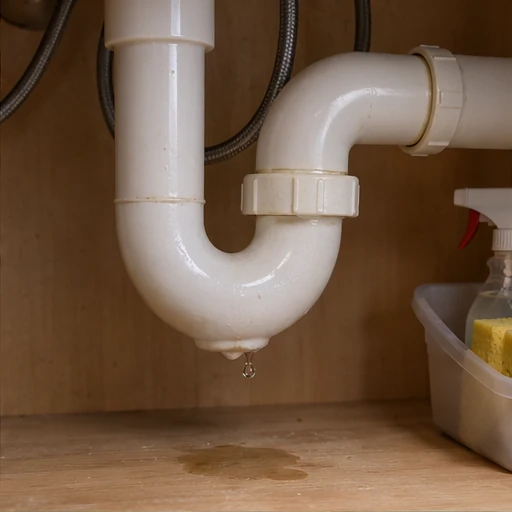
Water leaving the sink fills the curved trap, then flows down a sloped branch toward a stack and sewer. Water left in the bend blocks sewer gas. A vent allows air movement and helps protect that seal. A drip that appears as the basin empties points you toward the waste connections.
Pumped discharge
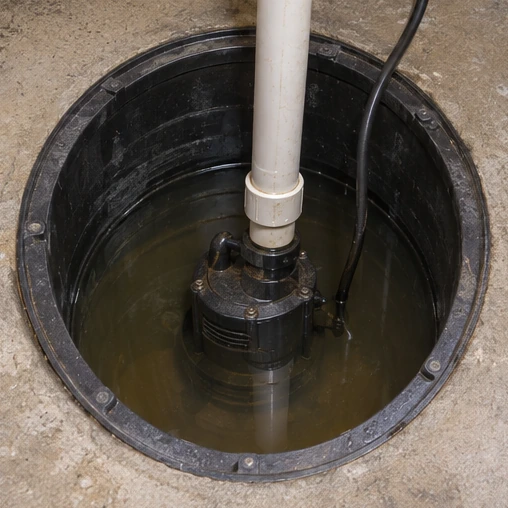
A sump pump lifts collected groundwater through its discharge line. A sewage ejector handles wastewater in a separate system. Each discharge is under pressure when its pump runs. Verify the pump, rated pipe and authorized discharge destination before planning changes.
Pipe material field guide
Follow an exposed run to a known fixture, meter or cleanout. Open a material below to compare its identifying clues and the next thing to verify. The illustrations highlight visible clues. Confirm the material from markings or records, especially for a suspected lead service.
CopperSupply · some DWV
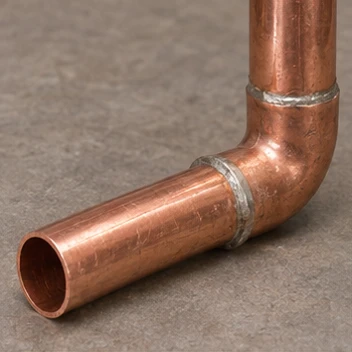
A copper elbow with silver-colored solder at the sockets.
Reddish brown at exposed edges, sometimes darkened or green on the surface. Soldered sockets and pressed fittings both occur. Older copper drains can be much larger than the nearby supply tubes.
On hard water tube, look for K (green), L (blue) or M (red). At the same nominal size, K has the thickest wall and M the thinnest. Yellow DWV marks drainage tube. These colors identify tube type, not the water temperature. An old solder joint can contain lead even when the tubing is copper.
LeadLegacy service · some old waste connections
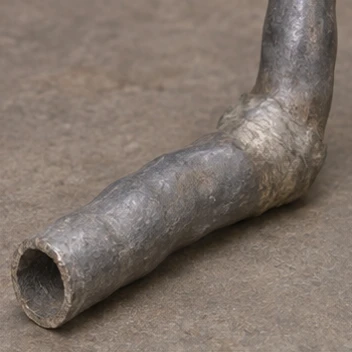
A dull gray service pipe with an irregular bend and a swollen joint.
An older service entering through the basement wall or floor may be dull gray and curved, sometimes with a bulb-shaped wiped joint. Paint, oxidation and repairs can hide those clues.
Record where the pipe enters and changes material. A lead waste bend and a lead drinking-water service pose different questions. For the service, check both sides of the utility inventory and follow the lead section below.
Galvanized steelLegacy supply · some drains
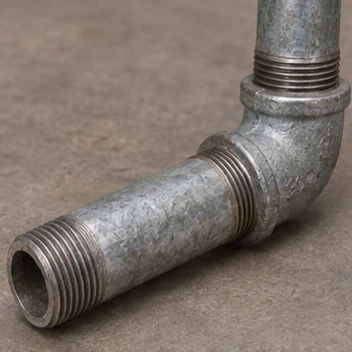
Exposed steel threads lead into a galvanized elbow.
Look for gray metal pipe screwed into threaded elbows or tees. A magnet can stick to steel. Rust near the threads is one clue, although paint can hide the finish.
Internal buildup can restrict flow while the outside looks intact. A galvanized service downstream of lead can retain lead particles. Ask the utility what its inventory records and ask a plumber to locate any flow restriction.
PEXHot and cold supply
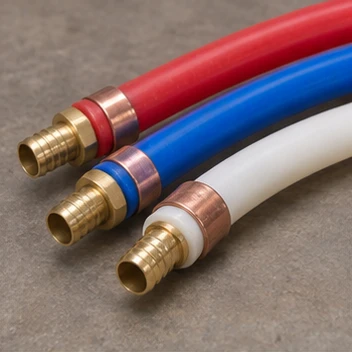
Flexible red, blue and white tubing with copper-colored rings and brass ends.
Flexible tubing often curves between fittings. It may be white, red or blue. A manifold can distribute separate runs to individual fixtures.
Look for PEX and ASTM F876 on the tube, a potable-water listing, and pressure and temperature markings. Crimp, clamp and expansion joints use specific compatible parts. Photograph the tube and its joint together before matching a system.
CPVCHot and cold supply
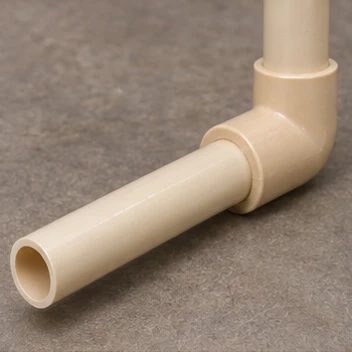
Cream-colored rigid supply tube entering a socket elbow.
Rigid pipe with socket fittings. Domestic copper-tube-size CPVC often looks cream or tan. Its outside diameter can differ from similarly named PVC pipe.
Look for CPVC and, on common household hot/cold systems, ASTM D2846. Check the rated temperature and pressure. Have a plumber evaluate cracked fittings or stressed joints before disturbing aging pipe.
PVCGravity DWV · rated cold-pressure applications
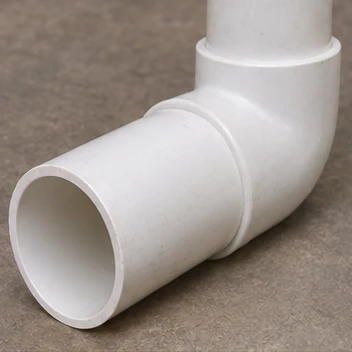
A white rigid pipe with a wide socket fitting.
Rigid pipe often appears white. A printed line may say DWV, cellular core, a pressure rating, or more than one standard. A white basement pipe might also be a pump discharge.
Read the entire marking and check the fittings. ASTM D2665 identifies PVC DWV. ASTM D1785 is a PVC pressure-pipe standard. Some solid-wall pipe carries both markings. A DWV-only fitting still makes the assembly unsuitable for pressure.
ABSGravity DWV
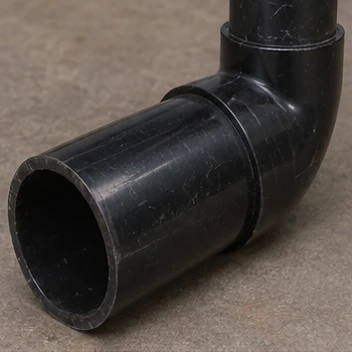
Black rigid drainpipe joined at a socket elbow.
Household ABS drain and vent pipe is commonly rigid and black, with socket fittings. Black plastic also occurs on buried water services.
Find the letters ABS and the DWV marking. Trace it to a fixture or stack. At an ABS-to-PVC repair, ask which transition is listed for those materials and that location.
PE / HDPEBuried cold-water service
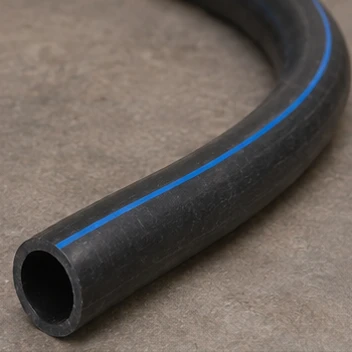
A curved black service tube with a blue stripe.
A flexible black or blue line may enter near the main shutoff. Polyethylene is also used for other utilities, so identify the service before touching it.
Check the exposed print for PE or HDPE, size, pressure class and drinking-water listing. The utility can help identify the buried section. A black sewer or drainage product can have a very different rating.
Cast ironGravity stacks and building drains
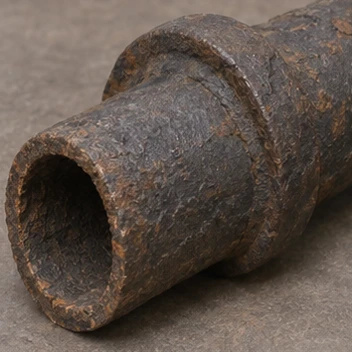
A rough cast-iron surface and thick bell-shaped hub.
Heavy, usually dark pipe with bell-shaped hubs or shielded banded couplings. In a renovated basement, a plastic branch may enter an older iron stack.
A rusty exterior alone cannot establish the wall condition. Recurring seepage along a seam, cracks or repeated backups warrant inspection. Ask how the stack will be supported if a section is removed.
Vitrified clayBuried gravity sewer lateral
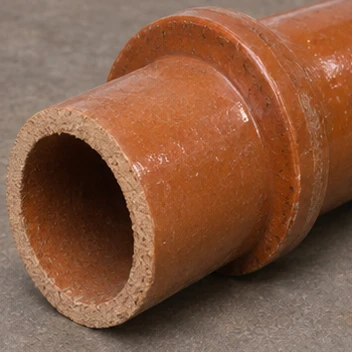
An orange ceramic pipe with a flared socket and a grainy cut edge.
Usually identified from records or a sewer camera inspection. The basement cleanout may be plastic even when the buried lateral is clay.
Ask for video with distances and a marked location for offset joints, roots or breaks. Compare cleaning with spot repair or replacement based on the observed defect.
Polybutylene (PB)Legacy pressure supply
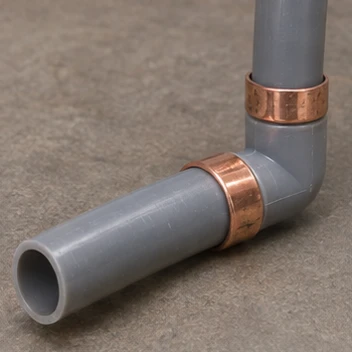
Gray flexible tubing with copper-colored crimp rings around an elbow.
Flexible gray, blue or other colored tube can resemble PEX. PB2110 printed on the tube is a stronger clue than color.
Document all exposed runs and any transitions. Ask a plumber familiar with PB to distinguish a single repaired fitting from a partial or whole-house repipe and identify what remains concealed.
How to read a pipe marking
Photograph one full repeat of the printed line, then the fitting beside it. Capture the manufacturer, material, nominal size, standard, pressure at its stated temperature, and any drinking-water certification. Write down where it goes.
Two white pipes, both marked “Schedule 40”
Schedule describes dimensions. One pipe could be cellular-core PVC marked for gravity drainage. The other could be solid-wall PVC with a pressure rating at 73°F. A temperature increase can reduce the allowable pressure. Verify the pipe, every fitting, the joint system and the permitted use together.
A potable-water certification addresses suitability for contact with drinking water. Pressure capacity is a separate specification. Missing print leaves a question open. Use manufacturer records or an on-site assessment before specifying a replacement.
Could the service line be lead?
Start where the water service enters the house. A copper line on the house side of a shutoff tells you about that segment only. The buried portion can change material before it reaches the street. Older solder and fixtures can also contribute lead.
Identify the supplier on your bill. City of St. Louis Water Division customers can check the map, compare the City’s identification photos and submit findings. Missouri American Water customers can check both utility-side and customer-side records. Elsewhere in the metro, ask your own provider for its inventory.
Record an unknown as unknown. Photograph the entry and visible transitions without sanding, cutting or disturbing the line. Ask the utility what field verification, testing and full replacement options apply to your address.
Reduce exposure while you verify. Use cold water for drinking, cooking and formula. Use a filter specifically certified for lead reduction and change cartridges on schedule. Boiling does not remove lead. Ask the utility or a certified laboratory for sampling instructions before collecting water.
Active supply leak. If you can safely reach a familiar, working fixture shutoff or main valve, close it. Avoid standing water near electrical equipment. For sewage backing up, stop using fixtures and keep people away from contaminated water.
Choose the scope. An accessible leaking trap joint and a pressurized line leaking behind plaster have different repair costs. Ask whether the quote covers one fitting, a branch, the whole distribution system, or the service to the street. Request separate prices for access, excavation, permits, testing and restoration.
Keep the evidence. Photograph the joint and a wider view. Note which fixtures were running, whether the leak continues with taps closed, and whether other rooms are affected. Ask for the replacement material, joining method and limits of the repair in writing.