Read the fuel type and model number on the exterior label. Leave covers in place.
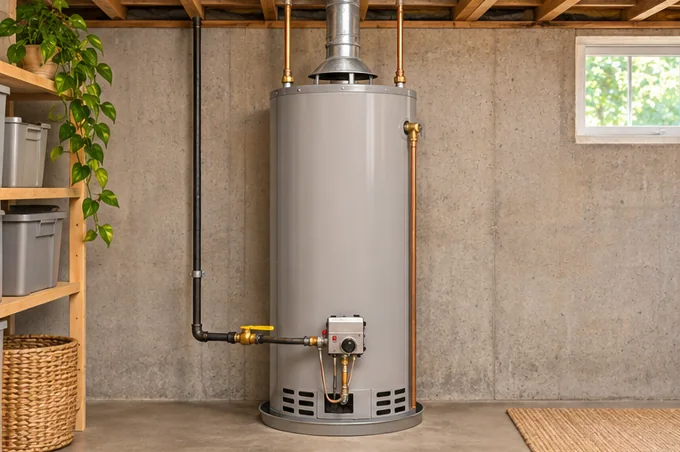
Gas storage tank
Look for a cylinder with a gas supply and an exhaust vent. A burner heats stored water. As hot water leaves from the top, cold water enters near the bottom.
When you open the tap
A full tank gives the first shower a head start. During a long draw, cold replacement water enters through a tube that carries it toward the bottom. The burner can already be reheating water while someone upstairs is still showering.
Why does the second shower turn cool?
Consider what changed. If the first shower was longer or the washer ran at the same time, the household may have used the hot reserve faster than the burner could restore it. If the same two showers worked last month, tell the plumber. A damaged inlet tube or a heating problem can reduce usable hot water.
What should I record before a service visit?
Photograph the model label and any visible status light. Note whether every faucet is affected and whether hot water returns after a quiet period. If there is water below the tank, note the highest visible wet spot from a dry location. A fitting can drip down the jacket and leave a puddle at the base.
Can I keep the existing tank?
A leaking connection may be repairable. A confirmed leak through the storage vessel calls for replacement. Ask the plumber to identify the source and show it to you before pricing a new tank. For a replacement, have the installer identify the vent type and explain any changes it requires.
What to compare in a replacement bid
Compare the first-hour rating with your busiest hour. Ask whether the existing vent can serve the proposed model.
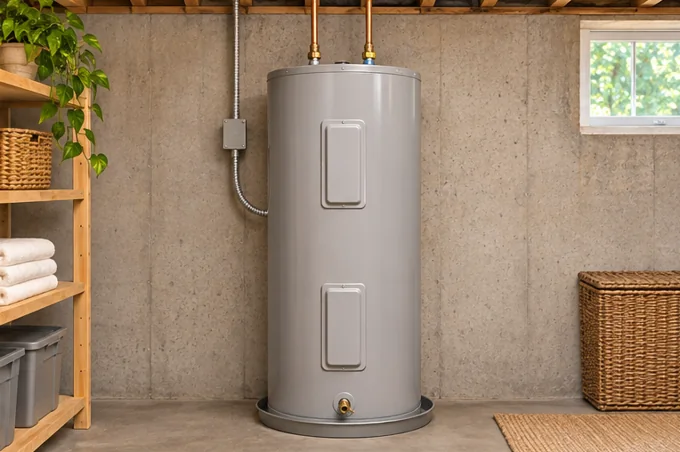
On a conventional electric cylinder, covered panels on the side typically conceal the heating elements. The insulated tank keeps water ready between uses.
When you open the tap
Many conventional two-element tanks heat the upper part first, then switch power to the lower element to heat the rest. That sequence explains how a faucet can start out properly hot even when the tank delivers much less hot water than it used to.
Why is the first minute hot but the shower short?
On a two-element model, a problem in the lower heating circuit can leave only the upper portion hot. Heavy use and a mixing problem can feel similar. Note how long the shower stays hot after several hours without use and whether another fixture behaves the same way.
What can a technician test?
With the model number and your observations, a qualified technician can check the power supply, thermostats and elements. An element or control can often be replaced if the tank is sound. Leave access panels closed. If a breaker repeatedly trips, leave the circuit off and arrange service.
Would a larger tank help?
First establish whether the existing tank still delivers its normal capacity. If demand has grown, compare the first-hour ratings and recovery rates on the proposed models. A larger cylinder also needs to fit through the doorway and leave room to service the elements.
What to compare in a replacement bid
Two tanks with the same gallon capacity can recover at different rates. Compare first-hour ratings and the circuit each model requires.
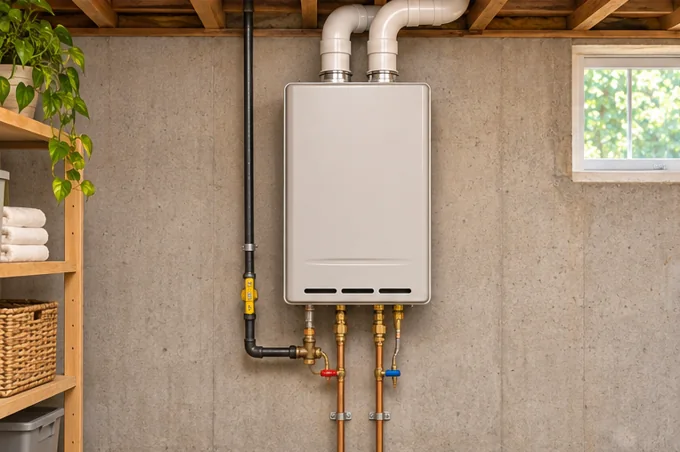
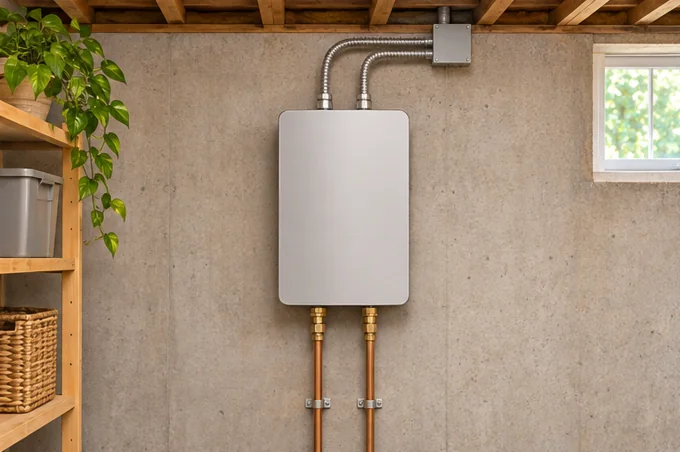
Opening a hot tap starts water moving through a heat exchanger. A gas burner supplies heat while water flows. Indoor units have a vent and typically occupy wall space.
When you open the tap
A flow sensor detects an open tap and the burner adjusts as water passes through the exchanger. A long shower can continue while demand stays within the unit’s capacity. At a distant faucet, the cooled water already sitting in the pipe still comes out first.
Why is the shower hot while a trickling faucet goes cool?
Tankless units need a minimum flow to start and stay on. If the symptom appears only at a trickle, record which tap is affected and whether normal flow restores heat. Ask for the activation and operating thresholds for your exact model.
What changes when two showers overlap?
Both showers share the exchanger’s output. Colder inlet water requires more heat per gallon, so a combination that works in summer can exceed capacity in winter. Give the installer your actual overlapping fixtures and ask for the rated flow at the winter temperature rise.
What should a service quote cover?
Photograph any displayed fault code before it disappears. Ask how the technician will check inlet restrictions, scale and the combustion or vent system. Have them identify the model-specific maintenance interval, water-quality limits and access needed to service the exchanger.
What to compare in a replacement bid
Ask what flow it can sustain with cold winter inlet water and two fixtures running. Include gas supply, venting and any condensate drain in the bid.
Electric elements heat moving water inside a compact enclosure. A whole-house model and a single-sink model can look similar. The model number and power rating tell you what each can serve.
When you open the tap
The heater draws substantial electrical power during a shower. With a fixed amount of power available, doubling the water flow roughly halves the temperature rise it can produce. A second tap can make a big difference on a cold morning.
Why does the stream slow or turn lukewarm?
Models respond differently at their heating limit. Some reduce water flow to maintain the target temperature. Others allow the outlet temperature to fall. If this happens only when fixtures overlap, note which fixtures were open and compare that demand with the performance chart.
Could one fit where my electric tank stands?
Wall space is only part of the decision. A whole-house unit may require several dedicated circuits. Ask an electrician for a service-load calculation and an itemized wiring estimate for the exact model. A spare breaker position alone does not establish available capacity.
What if the trouble starts at just one tap?
Compare another fixture at an ordinary flow. A low-flow faucet may draw too little hot water to activate the unit, while every fixture cooling together points toward a shared issue. Record the model, any displayed code and the fixtures involved before arranging service.
What to compare in a replacement bid
Ask an electrician to verify service and panel capacity. Include any new circuits in the installed price before comparing it with a tank.
A fan and heat pump, often mounted on top, move heat from the room into the tank. Many models also use electric elements during heavy demand. Compare energy use, fan sound, room airflow and the route for condensate before choosing a basement or closet location.
Indirect tank beside a boiler
The boiler sends heating fluid through a separate heat exchanger to warm domestic water. If you see a storage tank beside a boiler, check both model labels. Ask how quickly the combination can reheat the tank during morning showers.
Under the counter
What do you want the sink to do?
Start with the faucet you want to serve and how you use it. Filling a mug, washing hands and rinsing cookware call for different equipment.
Mini-tank for the regular faucet
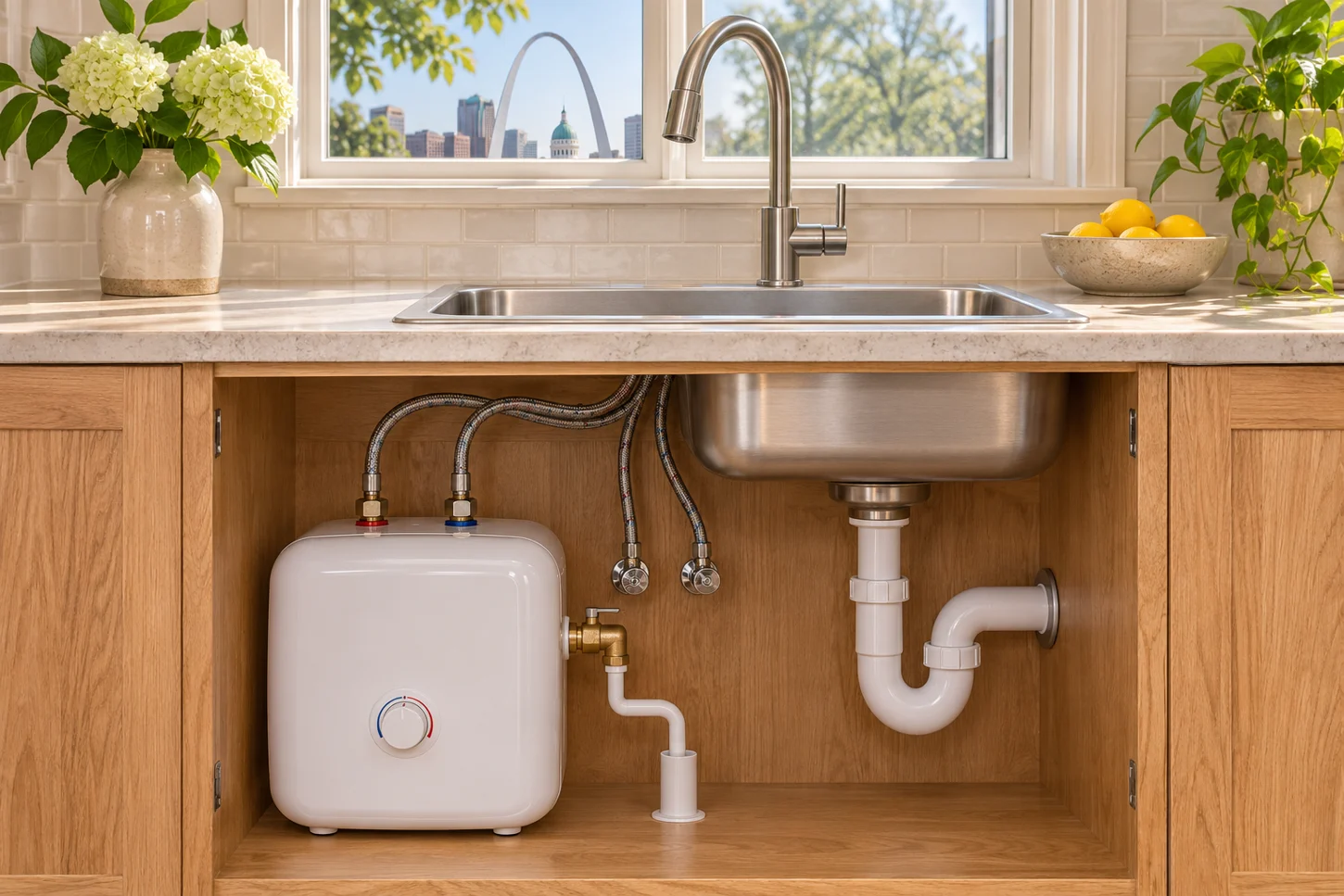
A small insulated tank under or beside the sink keeps a few gallons ready. It can serve the faucet on its own or bridge the wait for the main heater when configured as a booster. Check cabinet clearance and recovery time.
Will it fill the sink?
Ask where its inlet water comes from. A cold-fed mini-tank must reheat once its reserve runs out. A booster fed from the central hot line can cover the initial wait and then pass through the hot water that arrives. The same small tank can feel very different in those two kitchens.
Point-of-use tankless for a single tap
A small electric heater starts when the tap flows. Some models are sized only for a low-flow handwashing sink. For a kitchen, compare the model’s temperature rise at the flow you need to rinse a pan.
Will it handle the way I use this faucet?
A handwashing model may rely on a low-flow aerator. Ask for its minimum activation flow and its predicted outlet temperature at the faucet’s usual flow in winter. Confirm the required electrical circuit before choosing a model by cabinet size.
Dedicated near-boiling dispenser
Look for a second, small spout beside the kitchen faucet. A matched under-sink tank supplies very hot water for tea or cooking. Use the manufacturer’s compatible faucet and scald precautions.
Does it also heat the main faucet?
A dedicated dispenser feeds its own spout. It can fill a mug while the regular kitchen faucet still waits for the central heater. Compare how many cups the tank can dispense before reheating and whether there is space for the compatible spout.
Demand recirculation for a distant fixture
A pump brings centrally heated water through the line before use. This can help when the kitchen eventually gets plenty hot but wastes water while you wait. Ask how the water returns and what activates the pump.
What should happen before I turn on the tap?
With a demand system, a button or sensor starts a short pump cycle. Ask how long that cycle takes for your kitchen, whether the design needs a return line or uses the cold line, and how it affects the cold tap. Continuous circulation can lose heat from the pipes between uses.
What’s the small tank on the cold-water line?
A thermal expansion tank gives heated water room to expand. Picture the hour after a shower. The faucet is closed and the heater is warming the cold water that just refilled it. If a check valve or backflow device keeps water from moving back toward the street, that extra volume raises pressure inside the house.
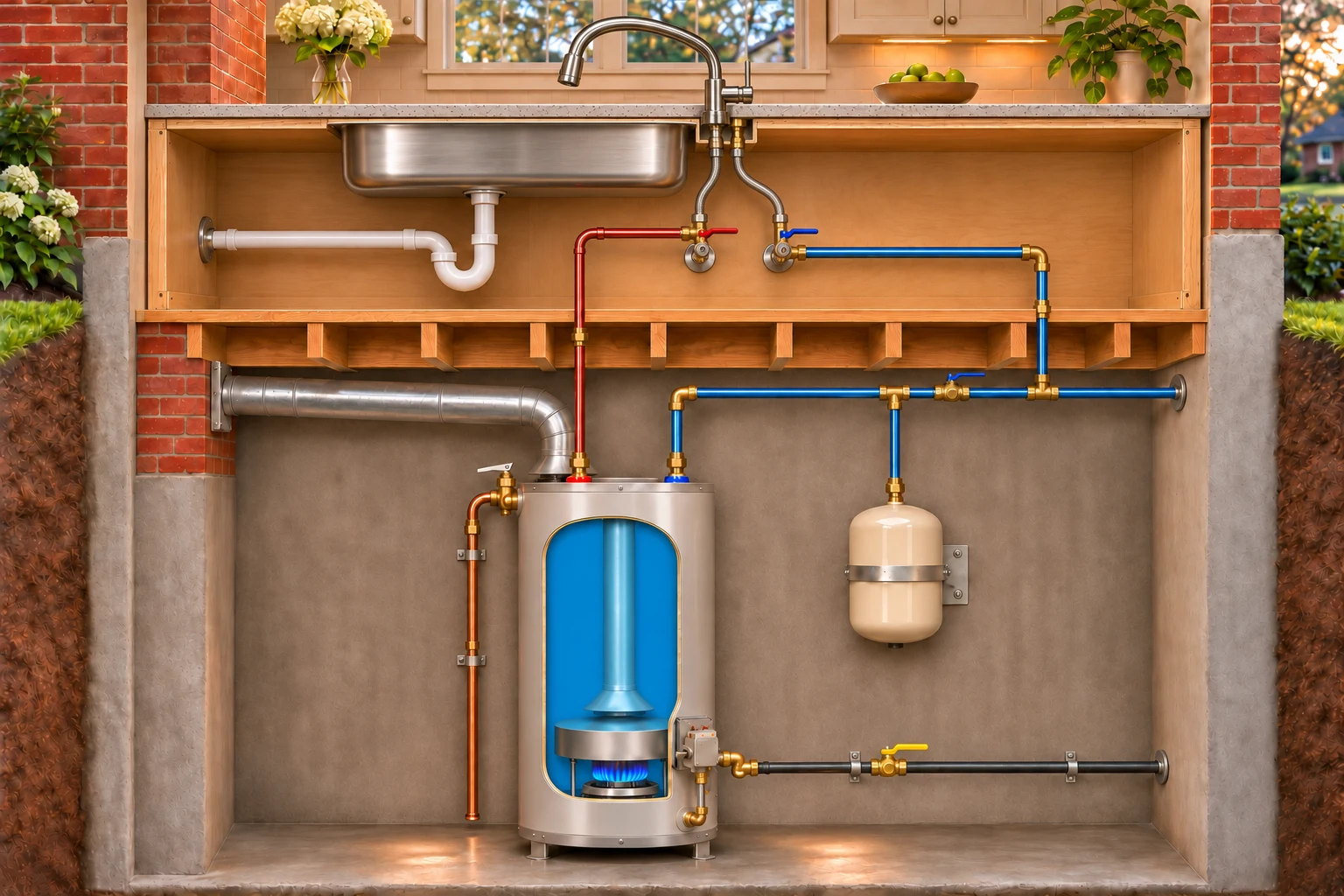
Gas storage cutaway
Hot supply
Cold supply
Sink drain
Follow the blue-tinted copper from the incoming supply. One branch feeds the faucet directly. The heater branch passes through its shutoff and shares a connection with the expansion tank before entering the heater.
View full-size illustrationIllustrative pipe routes. Spacing and clearances are schematic.Trace the connections as a plumbing diagram
Follow either faucet inlet back to its source. Used water leaves through the sink basket and P-trap on a separate drain.
WaterAir
Before reheating
An air cushion sits behind a flexible diaphragm.
WaterAir
As water heats
Expanding water pushes the diaphragm down, compressing the air.
Inside a potable-water expansion tank · Simplified cross-section
Where does St. Louis require one?
City of St. Louis. Under Ordinance 71644, chapter 5, §501.2, a new or replacement water heater on a closed system, or one requiring a pressure-reducing valve, generally needs a listed, properly sized expansion tank. The City also requires a visible label showing the measured building pressure and the tank’s pressure setting.
St. Louis County and its municipalities. The County’s published 2015-code amendment, §501.2, calls for an expansion tank with new or replacement water-heating equipment, with listed exceptions. St. Ann, for example, adopts the County plumbing code as amended. Confirm the edition and amendments enforced for the property before accepting a bid.
What about tankless and under-sink heaters?
Both cited texts exempt certain listed instantaneous heaters that store no water and meet the specified internal-diameter limit. A mini-tank stores water. For qualifying multifamily installations of 30 gallons or less with insufficient space, the texts allow an alternative with approval from the inspecting authority. Give the office the model and installation details before relying on an exception.
What should I see on the plumber’s quote?
Ask which code applies, what closes the water supply, and how the plumber sized the potable-water expansion tank for the heater and the measured supply pressure. Ask how its air charge will be matched, how the tank will be supported, and whether an existing tank was checked before reuse. A boiler may have a separate expansion tank serving its heating loop.
What if the relief pipe drips after reheating?
Tell the plumber when the drip occurs. Have them check supply pressure, expansion-tank condition and the relief valve. The relief valve is a safety device and must remain in service with its outlet unobstructed. See the guidance on relief-pipe discharge.
Start with the model number on the heater and the maintenance page in its owner’s manual. The right interval depends on what you own, your water quality and how much sediment previous service found.
Gas and electric storage tanks
Sediment settles at the bottom of the tank. A partial drain releases some water and loose sediment through the drain valve near the base. A flush uses incoming water to carry remaining sediment out. Check which procedure your manual calls for.
For example, one A. O. Smith residential electric manual calls for a drain, flush and anode inspection after the first six months, then uses the buildup found to guide future service. A Rheem heat-pump manual suggests drawing off a few quarts monthly. These are two different tasks and schedules.
Before opening a drain valve
Hot discharge can scald. Follow the model’s shutdown and cooling instructions and confirm a safe discharge route. Use the tank drain valve for sediment service. The temperature-and-pressure relief valve serves a separate safety function. If the drain is corroded, clogged or already leaking, or you cannot safely isolate and refill the heater, have a plumber handle it. For an electric tank, verify it is full and air is purged as directed before restoring power. Energizing an exposed element can destroy it.
What else belongs on the service record?
Record the model, service date, amount of sediment, any leaks and the next interval recommended for this tank. For tanks with a sacrificial anode, record its condition and whether replacement is due. A heat-pump model also has an air filter and a condensate drain. Use its manual for those separate checks.
Tankless heaters and under-sink units
Tankless service focuses on mineral scale in the heat exchanger and debris in the inlet screen. Rinnai recommends periodic professional flushing and screen cleaning, with timing based on water quality. For an under-sink unit, identify whether it is a mini storage tank, a tankless heater or a near-boiling dispenser and use that model’s service instructions.
If you smell gas, leave immediately. From a safe location, call 911 or Spire Eastern Missouri at 800-887-4173. Leave switches and appliances alone on the way out.
If water is coming from the relief pipe, keep clear. The temperature-and-pressure relief valve protects a storage tank. Its discharge can be scalding. Leave the outlet open and have a plumber determine why it is discharging. If water has reached electrical equipment, stay away from the wet area and arrange professional help.
For a tank, count the busiest hour. Write down showers, sink use and appliances likely to draw hot water in that hour. Compare that demand with the model’s first-hour rating, the gallons it can deliver starting with a fully heated tank.
For tankless, count what runs together. If fixtures draw 3 gallons of hot water per minute together, and incoming water is 45°F, delivering 120°F takes a 75°F rise. Find 3 GPM at that rise on the performance chart. Those figures illustrate the calculation. Use measured demand and winter inlet conditions for your house.
For a long wait, time the tap. After the pipes have cooled, compare the closest and farthest faucets. If only the distant one takes a long time and then stays hot, ask about the pipe run before replacing the heater.
Put two St. Louis replacement bids side by side
Give each installer the same model-label photo, fixture list and description of the problem. Request an itemized installed price covering the equipment, removal, labor, and any wiring, gas, vent or drain changes. Compare annual energy estimates using the same local utility rates, then check maintenance requirements and labor warranty.
Use the property address to confirm which office handles the work and who will arrange any required permits and inspections.