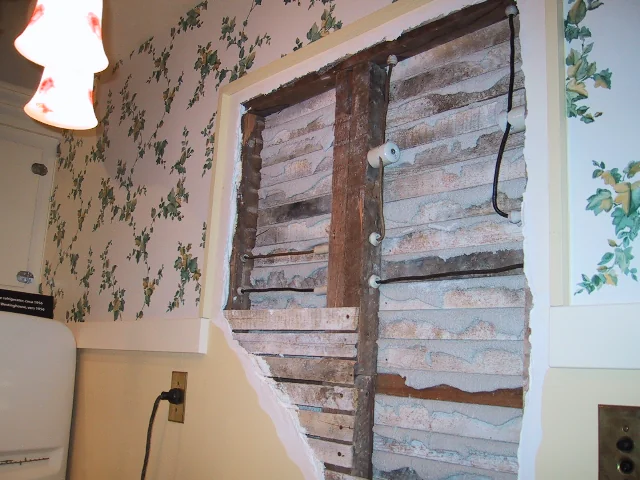
Knob-and-tube wiring · Bill Wtshymanski, public domain
What wiring might be in the walls?
Knob-and-tube describes how wires are carried. Aluminum and copper describe the metal. One house can contain several generations of both wiring methods and materials.
Individual insulated conductors run separately. Porcelain knobs support them; porcelain tubes protect them where they pass through wood. The original system lacks an equipment grounding conductor.
What to ask. Old porcelain can remain after a rewire. Ask an electrician which runs are energized, what they serve and whether later splices or insulation affect them. Get that assessment before attic insulation work.
Cloth-covered cable
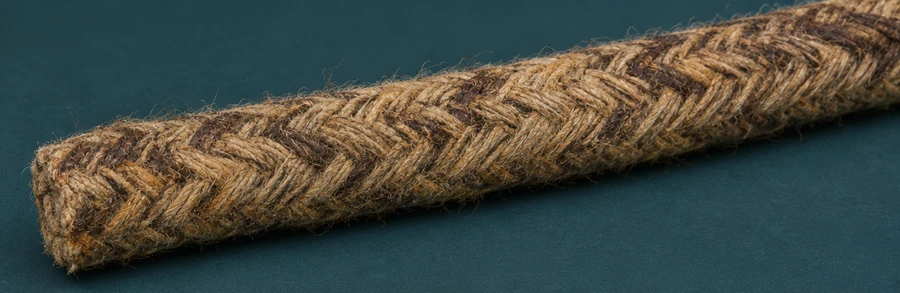
Zoom in on the tightly woven threads of the outer jacket.Illustrated specimen · STL HomeGuide
Several wires may share a fabric-covered outer sheath. Cloth can also cover individual older conductors. The cloth alone identifies neither the wiring method nor the conductor metal.
What to ask. A house can have cloth cable upstairs and newer cable in a remodeled kitchen. Ask for a room-by-room account of what was actually replaced.
Armored cable and conduit
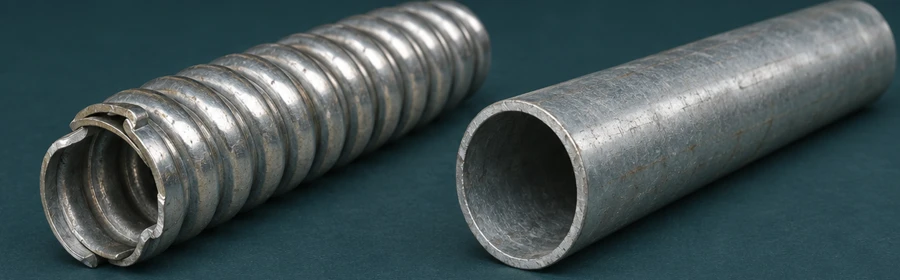
Compare the spiral armor on the left with the smooth conduit on the right.Illustrated specimen · STL HomeGuide
Spiral metal armor surrounds a cable assembly. Conduit is a raceway containing separately installed conductors. Several metal wiring methods look similar from a distance.
What to ask. A shiny metal covering cannot confirm a working ground. Ask which system is present and how grounding and bonding were verified.
Solid aluminum branch wiring
A documented solid aluminum branch conductor at a receptacle.EagleRJO · CC BY-SA 4.0 · WebP adaptation
Some homes built or rewired in the mid-1960s through early 1970s used small solid aluminum conductors for ordinary receptacle and lighting circuits. Deteriorating connections can overheat.
What to ask. Ask a qualified electrician experienced with aluminum wiring for a written assessment and a repair plan covering all affected connections. CPSC’s guide discusses replacement and specific permanent repair methods.
Aluminum service and feeder conductors
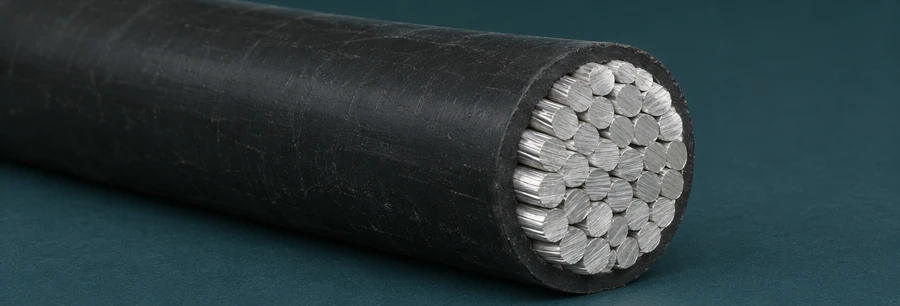
The cut end shows many individual strands inside one thick sleeve.Illustrated specimen · STL HomeGuide
Larger stranded aluminum conductors are a different application from older small solid aluminum branch wiring. A report that just says “aluminum” leaves the important question unanswered.
What to ask. Ask where the aluminum is, what it supplies, and whether its terminals and installation suit that conductor. A service cable and a bedroom receptacle circuit deserve separate entries in the report.
Modern nonmetallic cable
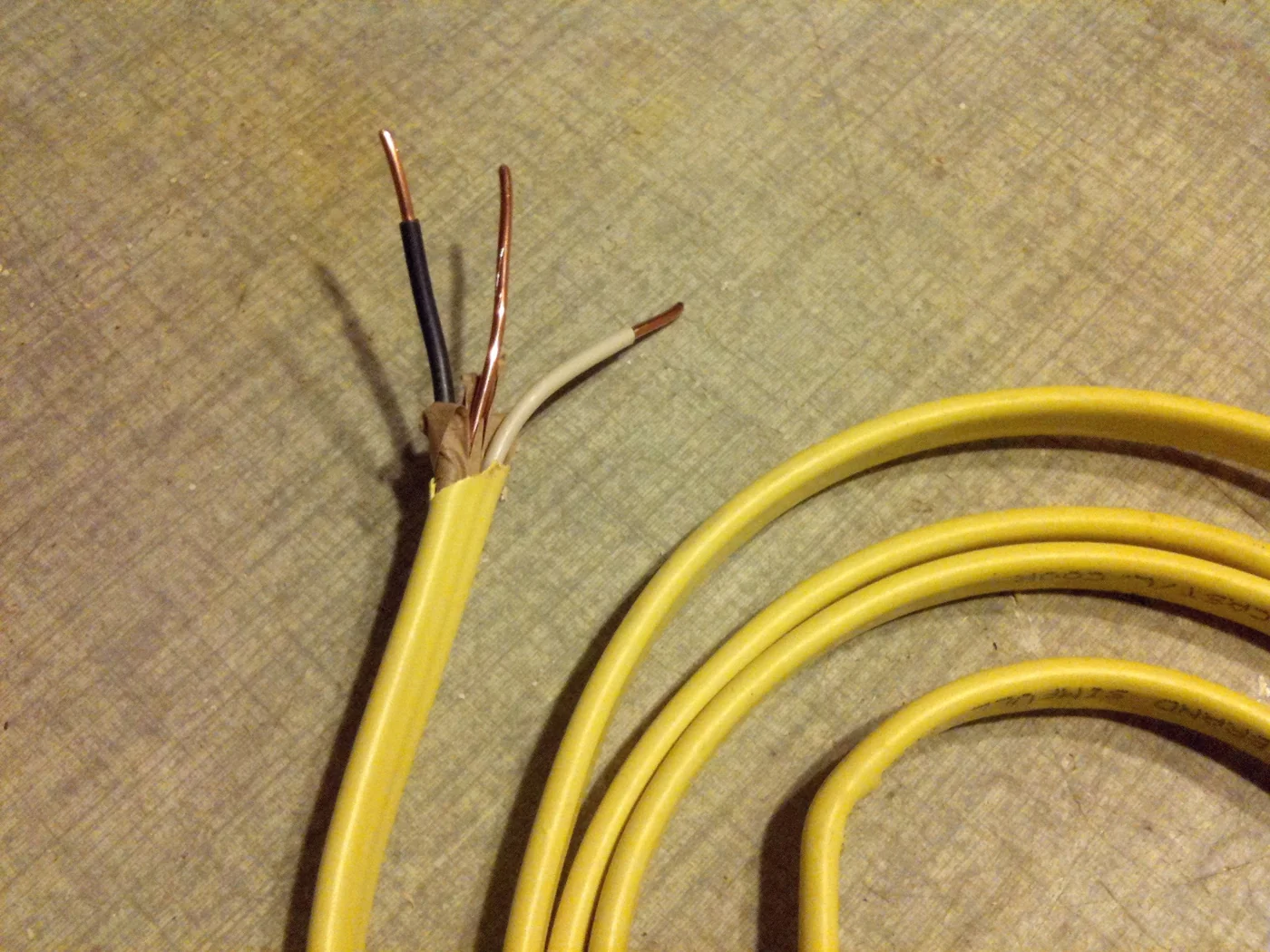
One outer jacket holds the insulated wires and a grounding conductor.ArnoldReinhold · CC BY-SA 3.0 · WebP adaptation
A common residential method bundles insulated conductors and an equipment grounding conductor inside an outer jacket. Jacket color alone cannot establish conductor size, material or condition.
What to ask. A renovated room with new receptacles can still connect upstream to older wiring. Ask for the circuit scope, permit record and inspection result.
Compare documented aluminum and copper samples
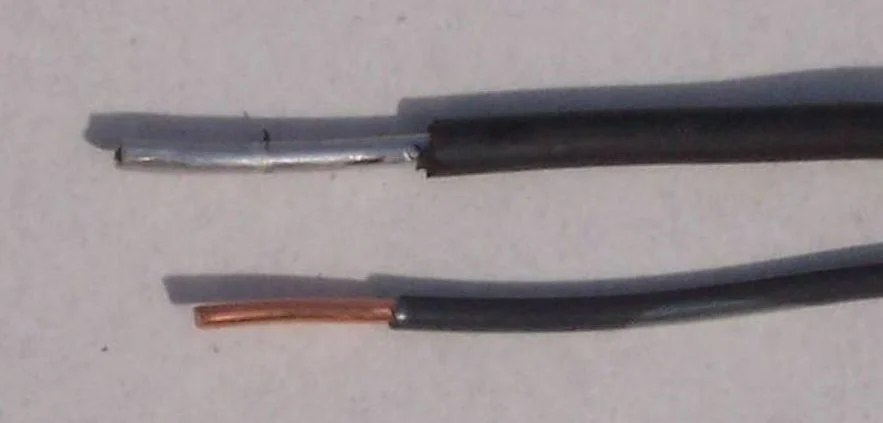
Aluminum above and copper below in these identified samples. Plating and lighting can change appearance; use records and professional identification for installed wiring.EagleRJO · CC BY-SA 4.0 · WebP adaptation
When someone says “110” or “220”
In everyday U.S. conversation, “110” or “115” often means a nominal 120-volt household supply. “220” or “230” often refers to 240-volt service or equipment. An actual equipment rating is specific. Check the full nameplate and installation requirements before buying an appliance.
120 V
Common for lighting, televisions and countertop appliances. On typical residential split-phase service, either hot leg to neutral supplies nominal 120 V.
240 V
Across the two hot legs of that same service, the nominal voltage is 240 V. An electric water-heater element is a common example. Some dryers and ranges use both 120 V for controls or a motor and 240 V for heat.
208 V
Some multifamily buildings supply 120/208 V. An appliance advertised as “220” may behave differently there. Have the building manager confirm the supply and check whether the model is rated for it.
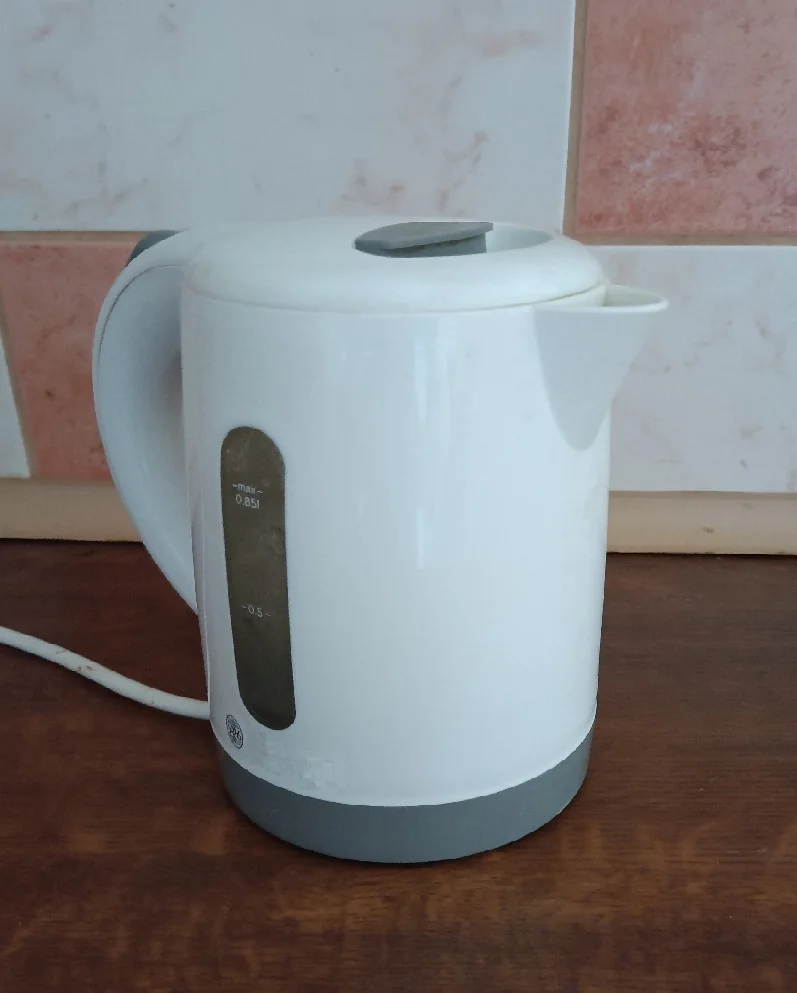
Read the numbers on the label.
Illustrative nameplateElectric kettle120 V 1,500 W
The examples assume a simple heating element running continuously. Thermostats cycle. For motors and electronics, power factor can be below one: use rated input watts or measured real power. A breaker’s amp rating is distinct from the current an appliance draws.
Multiply kilowatt-hours by your utility’s energy rate to estimate the energy charge. Circuit loading, breaker size, conductor size and outlet compatibility require a separate assessment.
Three ratings that answer different questions
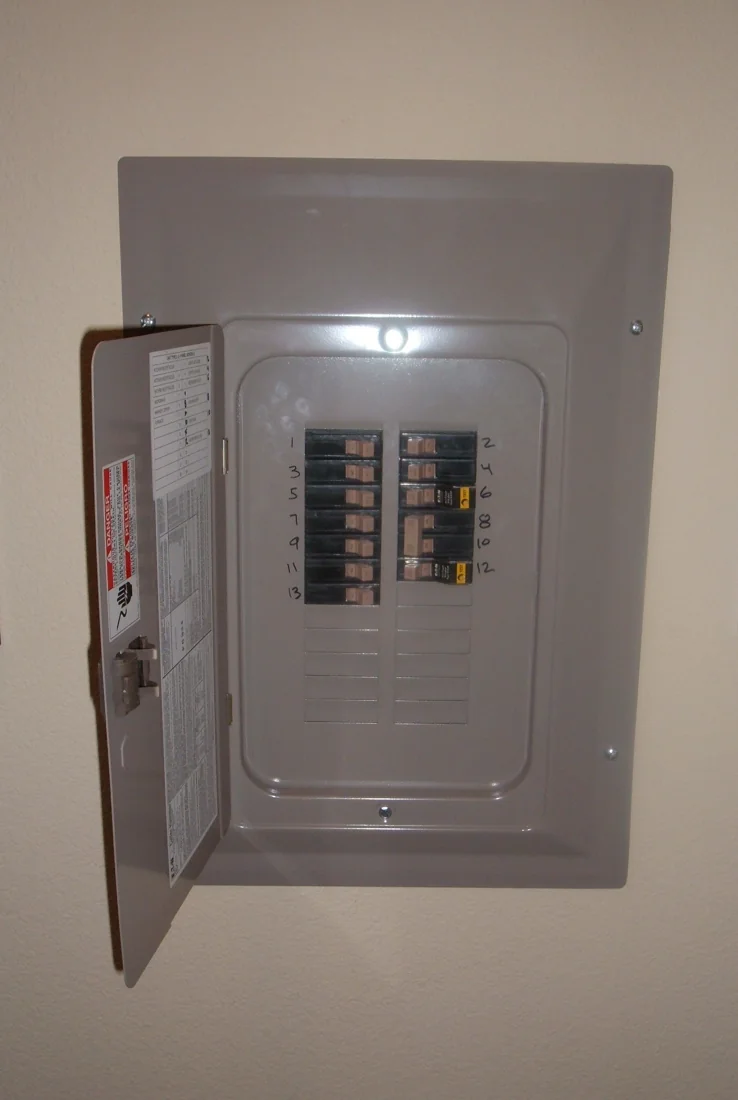
The breaker handles and circuit directory are visible with the protective cover in place. Their ratings answer different questions from an appliance label.BrokenSphere · CC BY-SA 3.0 · WebP adaptation
100 A or 200 A service
This describes the service capacity. A panel cabinet may be rated for more than the installed service. A photo, empty breaker spaces or the sum of the branch-breaker numbers cannot establish spare capacity. For an EV charger or heat pump, ask for a load calculation.
15 A or 20 A branch circuit
A branch circuit can serve multiple outlets. Two heaters in different rooms can still share a circuit. Repeated trips need investigation. Never increase a breaker or fuse rating to stop a trip.
The appliance nameplate
A dryer listing might say “120/240 V,” while a service quote says “200 A.” One describes the appliance supply; the other describes the house. Give the installer the exact appliance model and ask them to verify compatibility.
Fuses, breakers, GFCIs and AFCIs
Four devices can shut off power. Compare the hardware and the condition each one responds to.
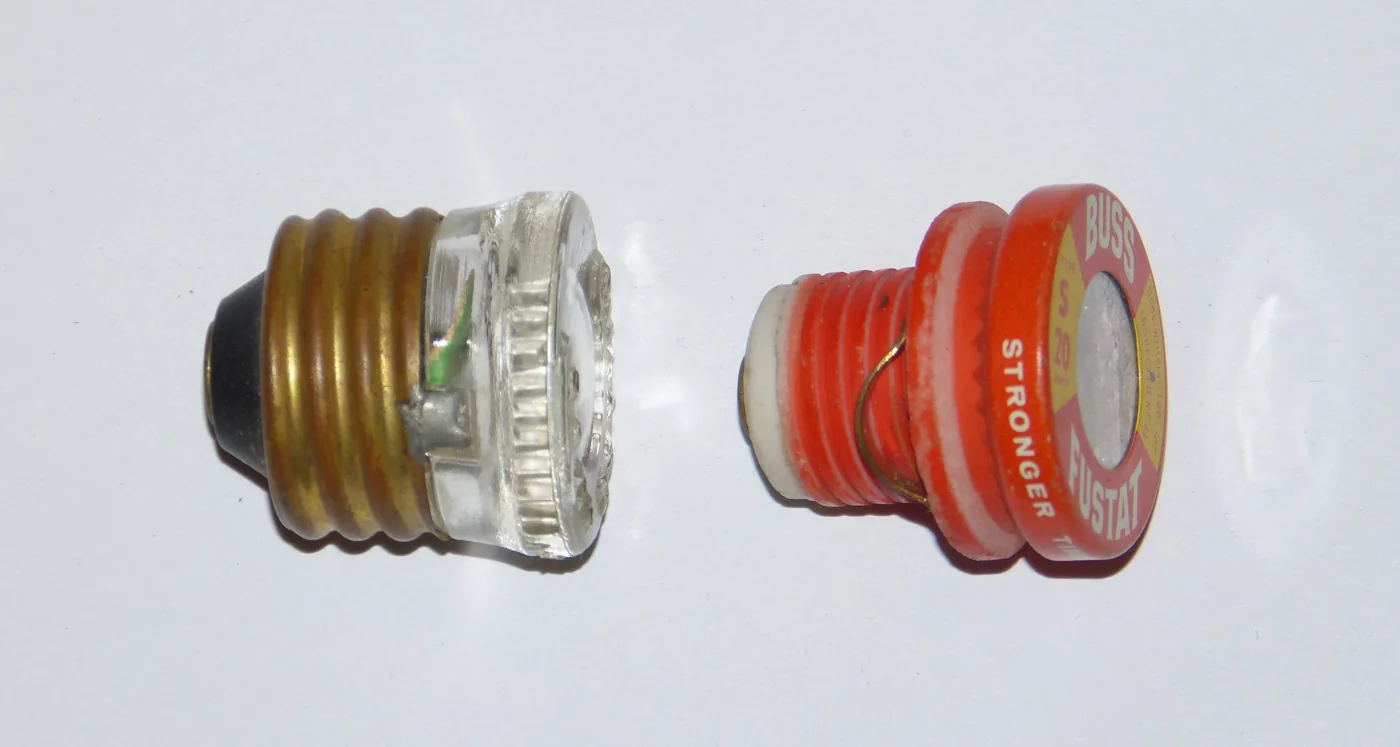
Fuse
A one-time opening
Excess currentMetal link melts
Inside a fuse, a thin metal element heats and melts when excessive current persists long enough. The open gap stops current through that circuit.
Look for The photo shows an Edison-base fuse on the left and a Type S fuse on the right. Other homes may have cartridge fuses.
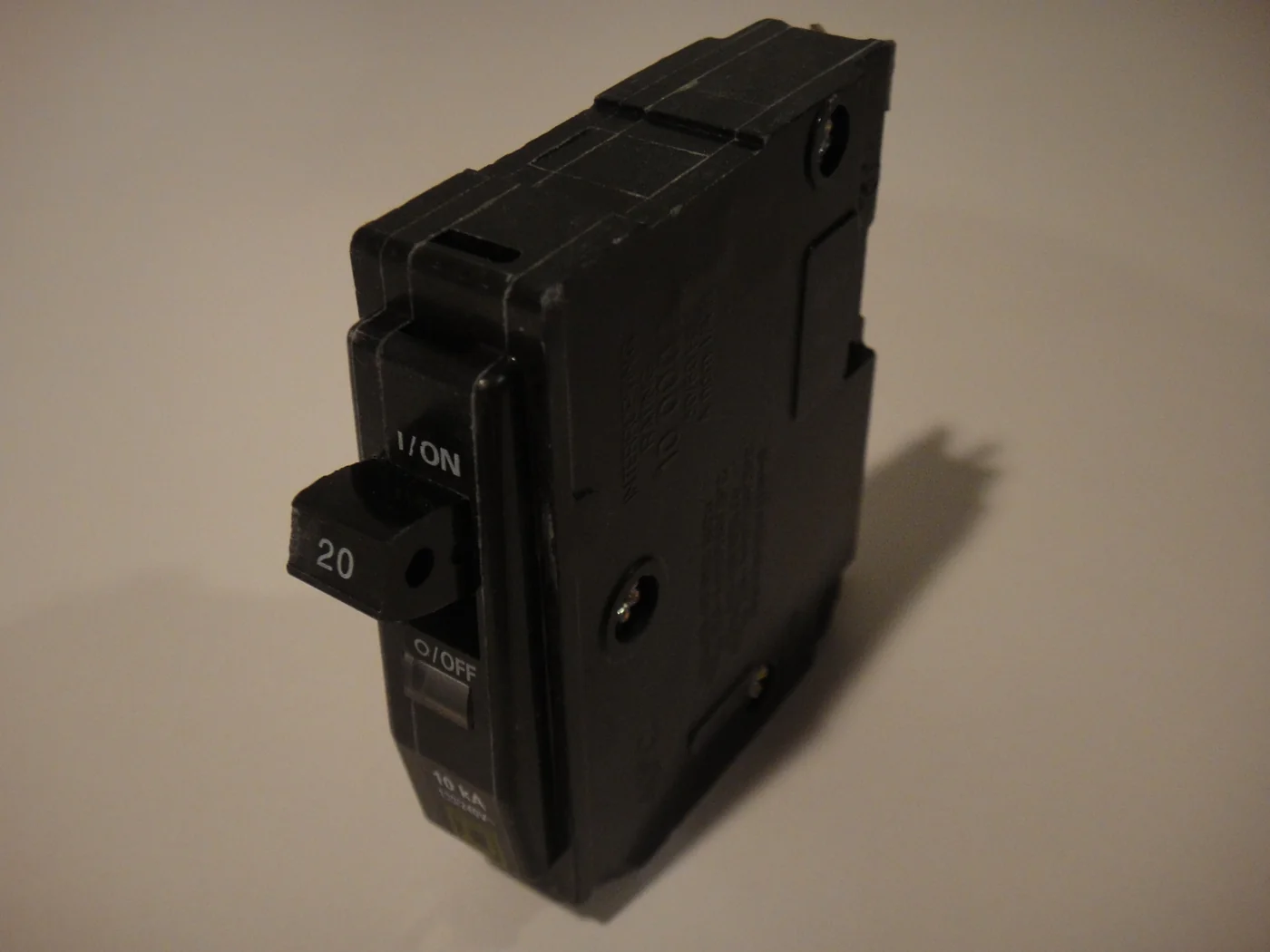
Circuit breaker
A switch that trips
Excess currentContacts open
An ordinary breaker interrupts an overload or short circuit by opening contacts. Its mechanism can be reset after the cause is addressed. Repeated trips warrant investigation.
Look for The 20 on this handle is its amp rating. A newer panel alone cannot tell you the age of the wiring.
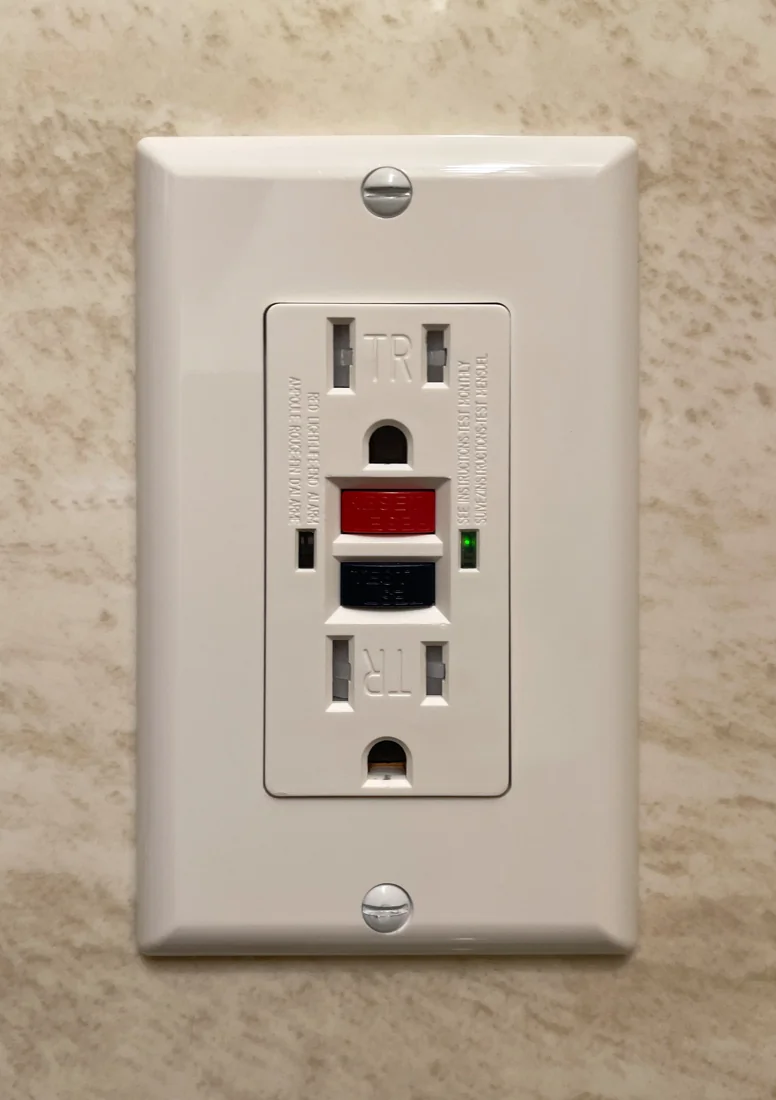
GFCI
Ground-fault circuit interrupter
Current imbalancePower interrupted
The device compares current leaving and returning through the circuit. A small difference can mean current is taking another path. Tripping quickly helps reduce shock risk.
Look for A receptacle may show TEST and RESET. Protection can also come from an upstream device. Three slots alone cannot establish grounding.
AFCI
Arc-fault circuit interrupter
Hazardous arc patternPower interrupted
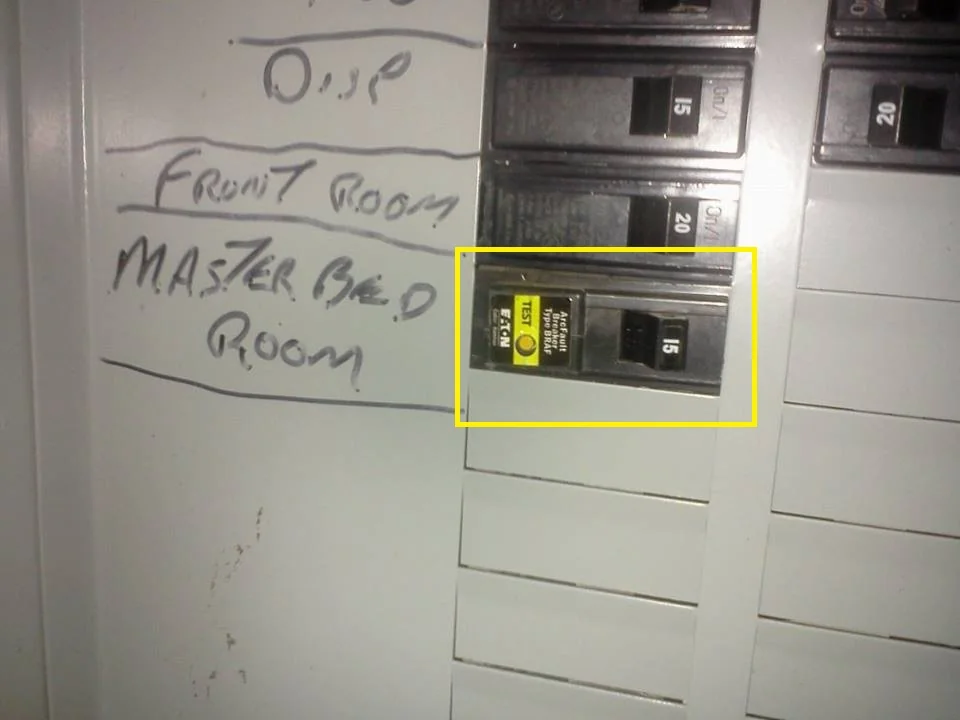
An AFCI recognizes certain electrical patterns associated with hazardous arcing and opens the circuit to reduce fire risk. The pattern can occur before an ordinary breaker detects excess current.
Look for The yellow outline in this photo marks the AFCI. Look for AFCI or arc-fault wording on the device itself. A test button alone cannot distinguish AFCI from GFCI. Dual-function devices provide both protections.
Save the inspection report, appliance nameplate, remodel permits and a note of which rooms are affected and when the symptom occurs. Photograph only what is already safely visible. Ask for the affected circuits, urgency, proposed scope, permit responsibility and final inspection in writing.