
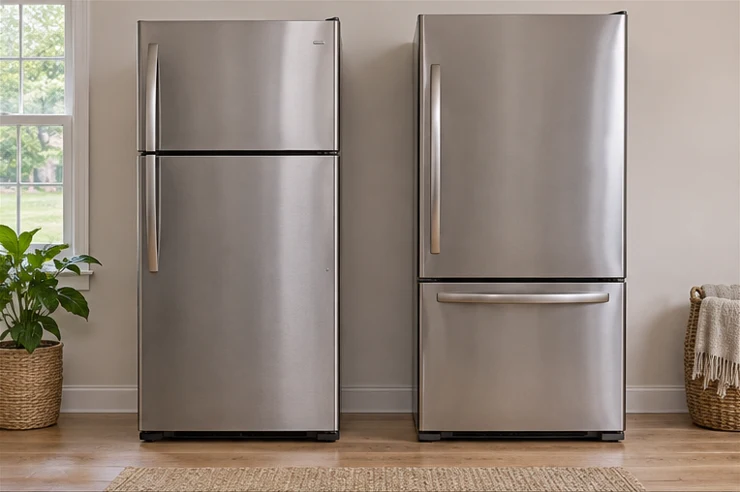
Top-freezer or bottom-freezer
One full-width fresh-food door. A bottom freezer puts fresh food at eye level but needs space for its drawer or door.
Major appliances
A refrigerator moves heat out of its cabinet. Inside, cold air needs room to reach the shelves and door bins.
See how it works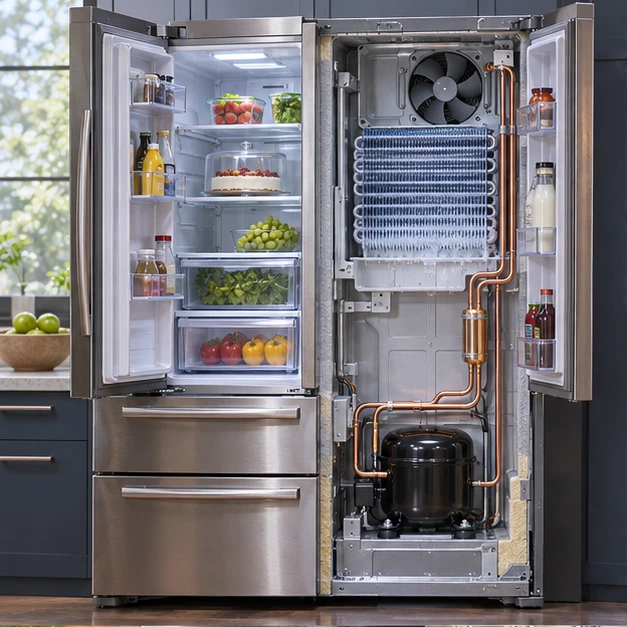
One full-width fresh-food door. A bottom freezer puts fresh food at eye level but needs space for its drawer or door.
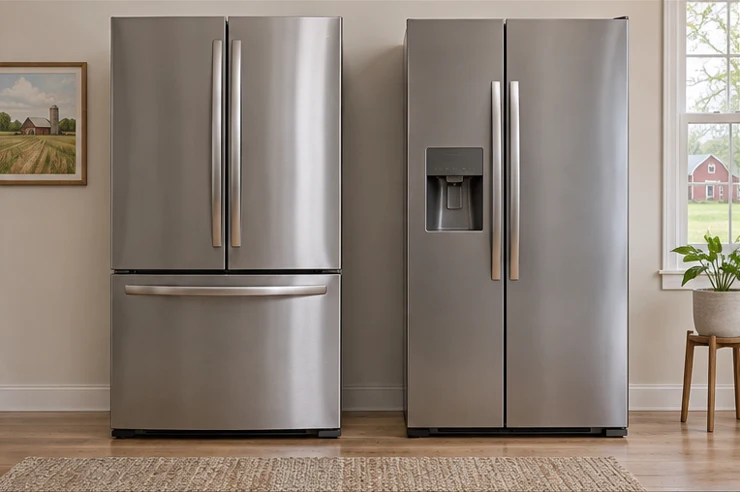
French doors open onto a wide fresh-food compartment. Side-by-side models divide the full height between fresh and frozen food. Try your widest tray before buying.
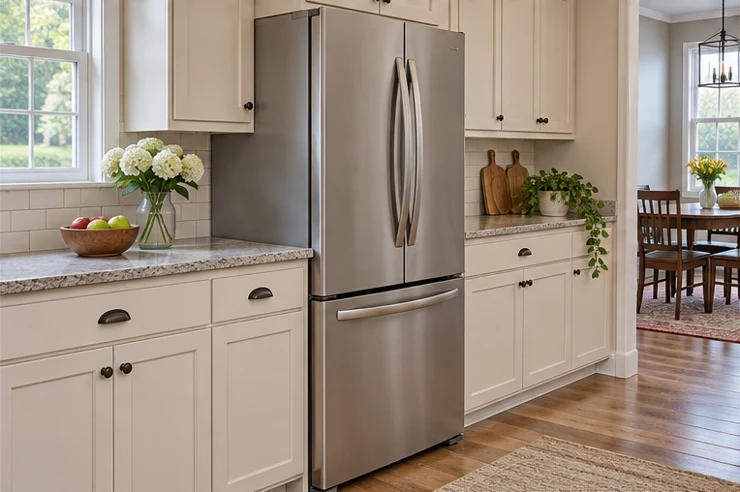
Counter-depth describes cabinet depth. Hinges and handles may still project. Built-ins have model-specific openings and ventilation paths.
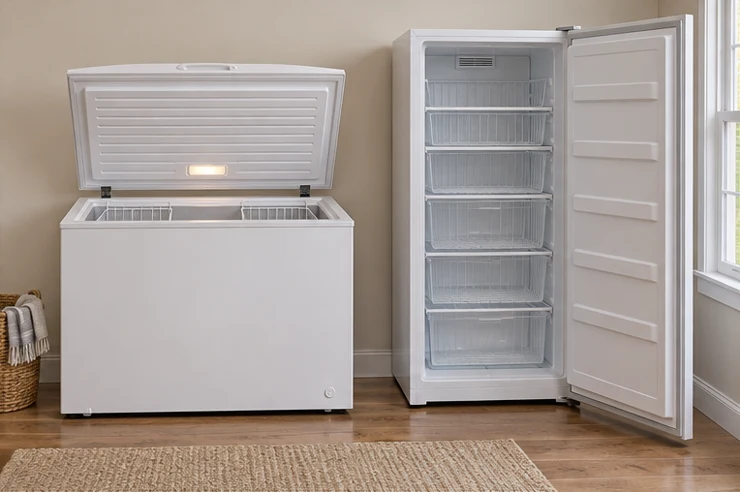
A chest model needs lid clearance above it. An upright needs door swing in front. For a garage, check the rated ambient-temperature range.
For U.S. homes. A NEMA code ending in P identifies the plug on the cord. R identifies the receptacle on the wall.
Match the blade or slot shapes. Your outlet may be rotated. Select a photo to enlarge it.

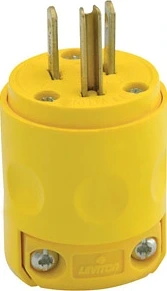
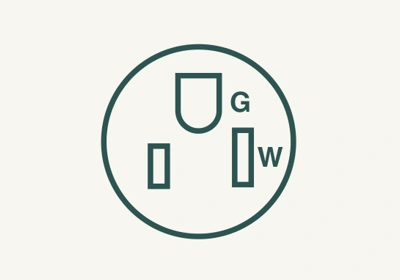
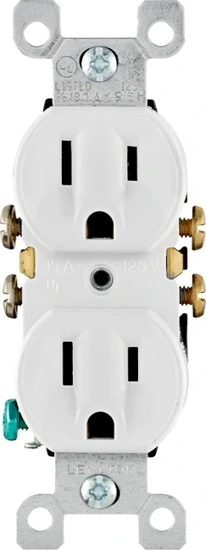
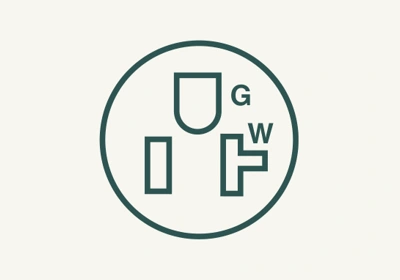
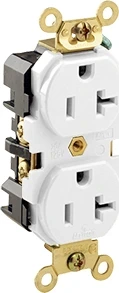
Face views adapted from the NEMA straight-blade configuration chart (PDF).
See Leviton’s 5-15R and T-slot 5-20R receptacle reference (PDF)
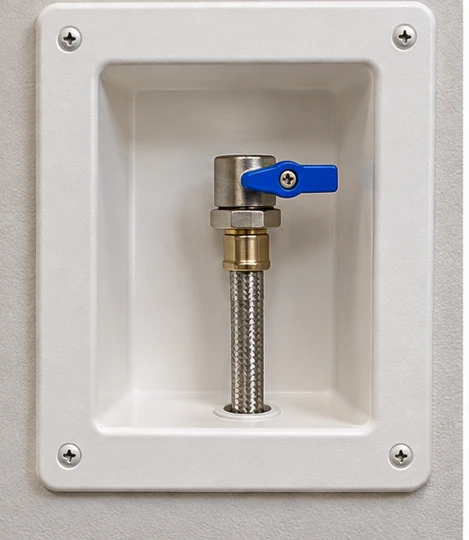
Ice makers and water dispensers may need a cold-water supply and accessible shutoff. A freezer without a water feature generally needs power only.
Before delivery, photograph the model plate and any safely visible outlet marking. Match the installation manual’s voltage, circuit rating and connection method. A matching plug shape alone cannot verify the circuit. If anything differs, have a qualified electrician check it before use. Avoid adapters or alterations to the plug.
One shelf feels warm? Check for food blocking an air vent and a package keeping the door from closing. Record a thermometer reading before calling for service.
Measure with the doors open. A case can fit between cabinets while a nearby wall still blocks the freezer drawer or crisper from sliding out.